
Landscaping Resources
5 Northern Michigan Landscaping Ideas for Your Next Project
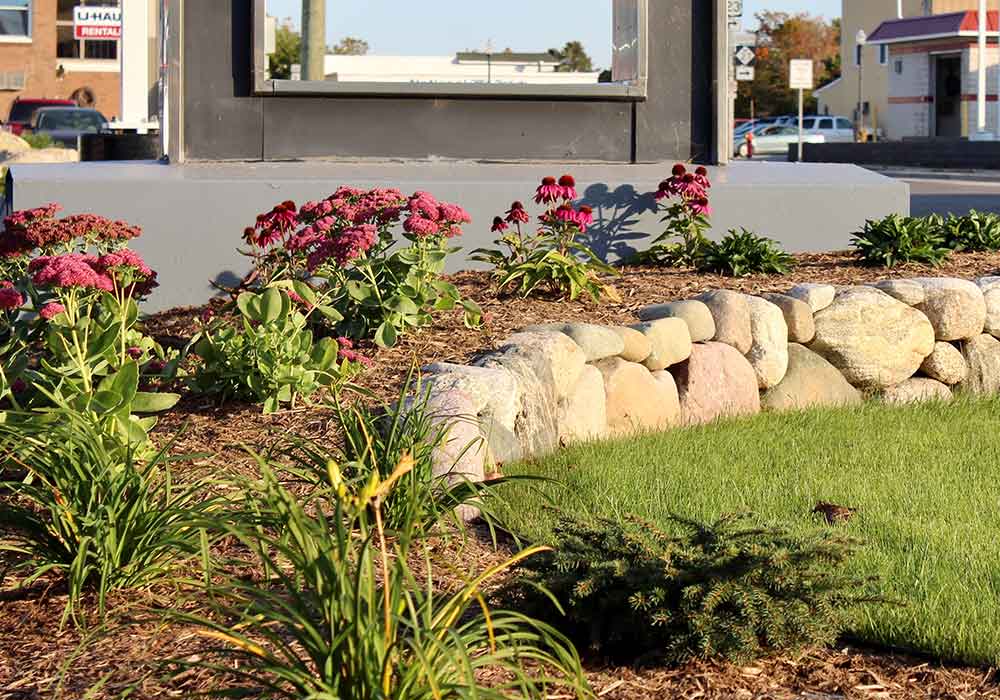
The internet offers a wealth of landscaping inspiration. You might even have a Pinterest board of what you’ve found: perfectly manicured lawns, lush garden borders, and stone patios that would look at home on the Italian coast. But if you’ve tried transplanting those ideas to a property in Indian River or Cheboygan, you already know this isn’t a forgiving climate for landscaping.
Here, our growing season lasts roughly five months. The winters are long and punishing. Our soil is mostly sandy glacial outwash near the lakes but heavier further inland. Oh, and the deer will try to eat almost everything you plant.
But that doesn’t mean you have to sacrifice a beautiful landscape. You just have to work with plants and structures that will endure up here. Here are some of our favorite ideas that fit the bill.
1. Start With Natives
The single best thing you can do for a Northern Michigan landscape is to take a walk in the woods and check out what’s already growing.
Native plants have already survived everything this region throws at them: freeze-thaw cycles, dry summers, heavy snows. Plants such as serviceberries, fragrant sumac, Michigan holly, and ferns are both aesthetically appropriate and proven performers.
Once established, native plants don’t need babying through harsh weather conditions because this area’s soil and rainfall patterns are what they evolved for. They also hold up well against the pest pressure and disease that takes down ornamental plants that weren’t meant to grow here.
Consider These Standouts
- Serviceberry (Amelanchier canadensis): White spring blooms, edible early-summer berries, and fiery orange-red fall color. Deer-resistant and available as a multi-stem shrub or small tree. Works well as a specimen or in a naturalized grouping along a woodland edge.
- Fragrant sumac (Rhus aromatica): A tough, spreading shrub that turns vivid orange and red in fall. It stabilizes slopes, spreads to fill space over time, and the red berries persist through winter. Low maintenance once in the ground.
- Paper birch (Betula papyrifera): Few things say “Northern Michigan” like a cluster of birches against a dark pine backdrop. The white bark provides year-round structure that will endure the winter.
- Red-Twig dogwood (Cornus sericea): Against a white snow background, those crimson stems are hard to ignore. Compact varieties like Arctic Fire work in tighter spaces. They’re tolerant of wet conditions, which matters on lower-lying properties and those near Inland Waterway lakes.
None of these plants is difficult to grow once they’re in the right spot. Consider which ones match your landscape’s drainage, sun exposure, and soil type before digging any holes. A plant that thrives in sandy lakeshore soil will struggle in denser soil elsewhere in the county.
2. Build a Hardscape That Survives Freeze-Thaws
Poured concrete patios and Northern Michigan winters don’t play well together. The concrete heaves, cracks, and becomes a tripping and accessibility problem. Your hardscaping elements (patios, steps, retaining walls, and outdoor living structures) need to account for the way our freeze-thaw cycles shift the ground.
Interlocking pavers are a better fit. Because each unit is individual, the system flexes with frost heave instead of cracking. If a section shifts, it can be lifted, regraded, and reset. It’s much easier than fixing poured concrete.
Natural stone is another option, especially flagstone and locally sourced fieldstone. Stone walls and pathways last decades because the material is already acclimated to the region, and a well-laid dry-stack retaining wall handles soil movement better than mortared block.
Additions Worth Considering
- Paver patios with a proper aggregate base: Base depth is important for a level surface, and cutting corners on it can lead to redoing the whole patio in a few years. A well-prepared base must account for drainage so you can enjoy your patio for years to come.
- Retaining walls: Many properties around Burt Lake, Mullett Lake, and Indian River have issues with sloping and grading. A tiered retaining wall turns a difficult slope into a usable outdoor space while managing erosion. Natural fieldstone retaining walls blend beautifully with the surrounding landscape.
- Fire pit areas: Our outdoor season is short, and even summer evenings can turn chilly, so a well-designed fire pit can extend the time you spend outside each year.
3. Change Your Property’s Nighttime Vibes
In the winter, the sun is gone before you get home from work. Your property spends a lot of time in the dark, which does your beautiful landscaping a disservice. Landscape lighting helps your yard still feel alive and welcoming after the sun checks out.
Low-voltage LED systems are energy efficient; the bulbs last for years; and the warm color temperature accentuates the natural tones of wood, stone, and plants.
Lighting Options to Explore
- Path lighting: Functional and attractive for walkways and driveways. In snow months, it helps define the edge of a cleared path.
- Up-lighting: A well-placed fixture at the base of a mature tree creates a dramatic effect, like a spotlight in an art gallery.
- Step and wall lighting: For properties with grade changes and retaining walls, integrated step lights improve safety and aesthetics. Try recessed lights for a subtler approach.
4. Design for All Four Seasons
A landscape in Petoskey or down in Indian River needs to survive a year that ranges from eight-degree February nights to eighty-degree July afternoons. It’s tempting to design only for summer, but a well-thought-out landscape should include something worth enjoying every month of the year.
Layered plantings are a great option to address this. The idea is to plant something that will bloom in every season: spring bulbs and serviceberry blossoms, summer perennials and ornamental grasses, fall color from maples and sumac, and winter structure from conifers, red-twig dogwoods, and seed heads.
Your Landscape Structure Champs
- Evergreen screening: White pine, arborvitae, and spruce provide privacy in the summer and a windbreak in the winter. It takes a while for them to establish them, but they’re well worth the wait.
- Ornamental grasses: Varieties like Karl Foerster or native prairie dropseed dance beautifully in the summer wind. They keep their structure through light snow and can be cut back in early spring.
- Deciduous trees: Sugar maple and red oak provide striking color in the fall and gorgeous structure in the winter, especially when draped with snow.
5. Keep Regional Quirks in Mind
We’ve collected a few practical tips from our years of working in this area.
- Soil varies across Cheboygan County. Sandy, fast-draining soil near the Inland Waterway lakes behaves differently from the heavier ground in low-lying areas. What you can grow depends on what you’re starting with. We recommend beginning with a soil test to guide your irrigation and soil amendments.
- Frost dates are no joke. Indian River averages a last frost around Mid-May and a first frost in early October. Choose plants rated for USDA Zone 5.
- The deer are hungry. Many popular ornamental plants (think hostas, tulips, and yews) are a deer buffet in Cheboygan County. Native plants like serviceberry, fragrant sumac, and many conifers tend to fare better. If you’re set on planting something deer consider a snack, plant it closer to your house or to human activity to deter them.
- Design and installation go together: It can be tempting to plan out a landscape on paper without thought to installation. In practice, install decisions like grading, drainage, or hardscape bases shape what’s possible for your property. Focus on designing for the property you have to prevent expensive later corrections.
Get a Landscape Worth Coming Home To
The best landscapes highlight the natural beauty surrounding them. An ideal landscape for Northern Michigan will partner with the hardwoods, cold winters, sandy soil, and short growing season. It will look amazing in October as much as July.
At Nate O’Grady Landscape, we can build that. We’ve been working on properties in and around Cheboygan County since 2017. We know the land here, what holds up throughout the winter, and how to build a landscape that will only look better with time.
If you’re ready to get started on a project, give us a call! We offer free estimates.