
Landscaping Resources
Spring Yard Cleanup Checklist for Northern Michigan Homeowners
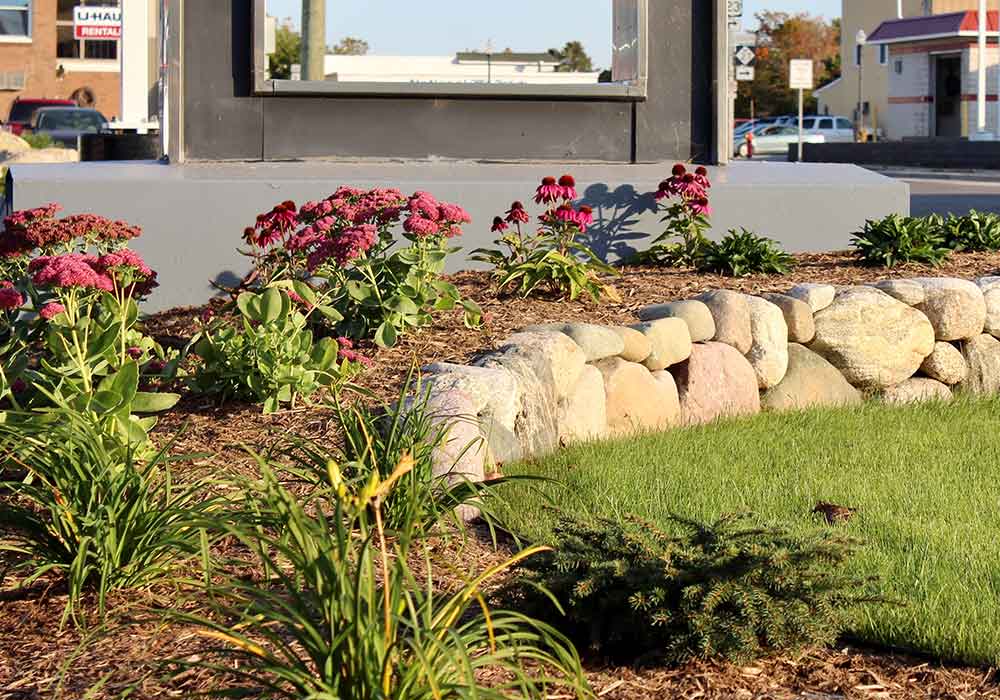
Spring arrives late in Northern Michigan, and the window between snowmelt and full green-up is short. What you do in that window sets up the whole growing season. Skip it, and you pay for it all summer with compacted lawns, winter-damaged shrubs, salt-burned edges, and beds that never quite recover.
Here’s the checklist our crews at Nate O’Grady Landscape follow when we open up properties in the spring, adapted so you can work through it on your own.
Wait for the Ground to Dry Before You Start
The most common April mistake we see is homeowners grabbing a rake on the first warm Saturday, while the turf underneath is still saturated. Walking on it, raking it, or running a mower across it compacts the soil and tears out crowns of grass that are just starting to green up. You end up with footprint-shaped dead patches in June.
Rule of thumb: if your boots leave clear impressions in the lawn, it’s too wet. Start on the hardscape, the driveway edges, and the beds instead. The lawn can wait a week.
Walk the Property First
Before you pick up a single tool, take twenty minutes and walk the full perimeter of your yard with a notebook or your phone. You’re looking for what winter did, not what you’re about to do. In Northern Michigan, that usually includes:
- Broken or hanging branches from ice load, heavy wet snow, or wind off the lake. Big ones overhead are a safety issue and belong to a tree service, not a weekend project.
- Plow damage along driveways and walkways, including ripped-up sod, gouged lawn edges, and displaced pavers.
- Salt burn on grass, shrubs, and perennials near any surface the road commission or your plow driver salted.
- Vole tunnels running under where the snow sat longest, usually showing as winding bare tracks through the turf.
- Frost heave on pavers, stepping stones, retaining wall blocks, and landscape lighting fixtures.
- Winter kill on evergreens, especially boxwood, arborvitae, and yews on the windward side.
Write it down. A list keeps you from standing in the yard three weeks from now wondering what you were going to do about that leaning birch.
Clear Debris in the Right Order
Start big, end small. This saves you from raking a bed clean and then dumping a handful of sticks back onto it when you finally get around to the tree line.
1. Large limbs and fallen branches
Haul these out first. If a limb is bigger around than your wrist and it came out of a mature tree, look up before you grab the rest of it. A branch that snapped partway and is still hanging is what arborists call a widow-maker, and it’s not worth the trip to the ER. Leave the ones over your head for a professional.
2. Leaves, pine needles, and matted debris
Anywhere snow sat for months, you’ll find a damp, flattened layer of leaves and needles. In Northern Michigan, this is especially bad under white pines, hemlocks, and along the north sides of buildings. That mat holds moisture against your grass and invites snow mold, which shows up as gray or pink circular patches when the snow retreats. Rake it out, don’t till it into the lawn.
3. Sand and gravel off the driveway and walks
The county and most plow drivers use a sand-salt mix up here. By April, the edges of your asphalt and the first few feet of lawn next to it are buried in grit. Shovel or stiff-broom the bulk of it back onto the driveway so you can sweep it up, then lightly rake what’s left out of the grass. Leaving it there smothers the turf and feeds crabgrass later.
4. Bed cleanup
Cut back last year’s perennial stems to about three inches. Pull any obvious weeds while the soil is soft. Leave the mulch in place for now; you’ll top-dress it later, not replace it.
Assess Your Lawn
Northern Michigan lawns go through a lot between November and April. Cold-tolerant cool-season grasses like Kentucky bluegrass and fine fescues handle it well, but they still need help to come back strong.
Walk the lawn once it’s dried out and look for:
- Snow mold: Gray-pink matted circles, usually where snow piled up. Gently rake the affected areas to break up the mat and let air in. Most of it grows out on its own.
- Vole damage: Winding brown tracks through the turf. Rake them out, reseed the worst spots, and keep an eye on them.
- Plow and salt damage along edges: Dead turf next to driveways and walkways. These spots almost always need reseeding or a small patch of new sod. Don’t just fertilize them and hope.
- Bare or thin areas: Overseed in early to mid-May, once soil temperatures are consistently in the 50s. Too early and the seed sits cold and rots; too late and you’re fighting summer heat.
- Thatch: If you have more than half an inch of brown, spongy material between the green blades and the soil, a power rake or a core aeration later in the season is worth the money.
A word on fertilizer: Resist the urge to throw down a heavy feed the first warm weekend. A light application when the grass starts actively growing is plenty. Heavy early feeding pushes top growth before the roots are ready and makes your lawn more vulnerable to summer stress.
Prune with the Calendar in Mind
Pruning is where a lot of good intentions go wrong. The general rule is that early spring, before buds break, is the right time to prune most deciduous trees and shrubs, including fruit trees, crabapples, and most ornamentals. But not everything.
- Prune in early spring: Apples, pears, crabapples, summer-blooming shrubs like potentilla and spirea, most shade trees, and anything that’s obviously dead, damaged, or crossing.
- Wait until after they flower: Forsythia, lilac, rhododendron, serviceberry, and any shrub that blooms on last year’s wood. Prune these too early and you cut off every flower for the season.
- Don’t prune at all in spring: Oaks and elms. Sap flow in spring invites oak wilt and Dutch elm disease, both of which are present in Michigan. If an oak has to come down or be pruned, do it in late fall or winter.
For evergreens that suffered winter burn, wait until mid to late May before you cut. Brown needles and bronze tips often bounce back once new growth pushes, and pruning too early takes off material that would have recovered on its own.
Inspect Trees for Winter Damage
Heavy snow, ice storms, and spring winds off Lake Michigan and Lake Huron all leave their mark on mature trees. Some of what they leave behind you can handle yourself; some you shouldn’t.
Handle yourself:
- Small broken branches you can reach from the ground with hand pruners or loppers.
- Light pruning of young ornamentals.
- Raking debris from the drip line.
Call a tree service:
- Any branch over your head that needs a saw.
- Cracked or split trunks, large hanging limbs, and leaning trees.
- Trees showing signs of decay, carpenter ant activity, or fungal growth at the base.
- Anything near power lines, ever.
Mature hardwoods in our area, especially sugar maples, beeches, and white pines, can throw surprisingly large limbs in a spring thaw. If you’re not sure whether a tree is safe, get an arborist to walk it with you.
Refresh Your Beds and Mulch
Once the beds are cleaned out and pruned, edge them before you mulch. A clean, hand-cut edge between turf and bed makes more visual difference than almost anything else you can do in the spring, and it keeps grass from creeping in all summer.
On mulch, the rule is top-dress, not bury. Most established beds only need an inch of fresh mulch to look refreshed and do their job. Piling new mulch on top of old every year leads to a thick, water-repelling layer that suffocates roots. If you’re already at three or four inches in the bed, pull some out before you add more.
Keep mulch pulled back from the trunks of trees and the stems of shrubs. Mulch volcanoes around tree bases, the ones you see in commercial parking lots, rot bark and invite disease. Flat and wide, not tall and mounded.
Check Hardscapes and Lighting
Freeze-thaw cycles in Northern Michigan are brutal on pavers, retaining walls, and anything set in the ground. Walk your patio, walkways, and steps and look for:
- Pavers or stones that have heaved or settled unevenly.
- Cracked or displaced wall blocks.
- Polymeric sand washed out between pavers.
- Landscape lighting fixtures that have tipped, cracked lenses, or corroded connections.
- Irrigation heads damaged by plows or frost.
Small settling issues can often be lifted and reset. Larger failures, especially in retaining walls holding back a grade, usually mean the base has shifted and the fix is a rebuild. Catch it early and the repair is much smaller.
A Note for Seasonal and Vacation Property Owners
If your property sat closed up all winter, your cleanup list is longer and more time-sensitive than a year-round homeowner’s. A few things worth adding:
- Walk the roofline and look at the soffits, gutters, and downspouts. Ice dams leave their mark.
- Check that irrigation, outdoor spigots, and any lakeside watering systems survived the winter before you turn them on.
- Have someone with local knowledge look at the property before the season opens, not after. Shoreline erosion, fallen trees, and plow damage all happen quietly while you’re downstate.
If the property isn’t being actively maintained, book your spring visit early. The week before Memorial Day is the busiest stretch of the year for every landscape crew in Cheboygan and Emmet County.
This is why we work with a lot of seasonal owners on standing spring openings. One phone call, a predictable week on the schedule, and the property is ready when you pull in the driveway.
When to Call a Professional
Most of this checklist is homeowner-friendly work. The parts that aren’t tend to be the same every year: anything involving mature trees and a saw off the ground, any retaining wall or paver work that’s settled or failed, irrigation start-up if you’ve never done it before, and shoreline work if you’re on one of the inland lakes. Those are the calls worth making early, because the good crews book out fast once the season starts.
If you’re in Cheboygan County, Indian River, Cheboygan, Petoskey, Harbor Springs, or anywhere else in our service area and you’d rather have a crew handle the spring cleanup from top to bottom, Nate O’Grady Landscape opens up properties every spring for both year-round homeowners and seasonal residents. Give us a call at 231-290-3389 or reach out through our website to get on the schedule.