
Landscaping Resources
When to Start Lawn Care in Northern Michigan (And What to Do First)
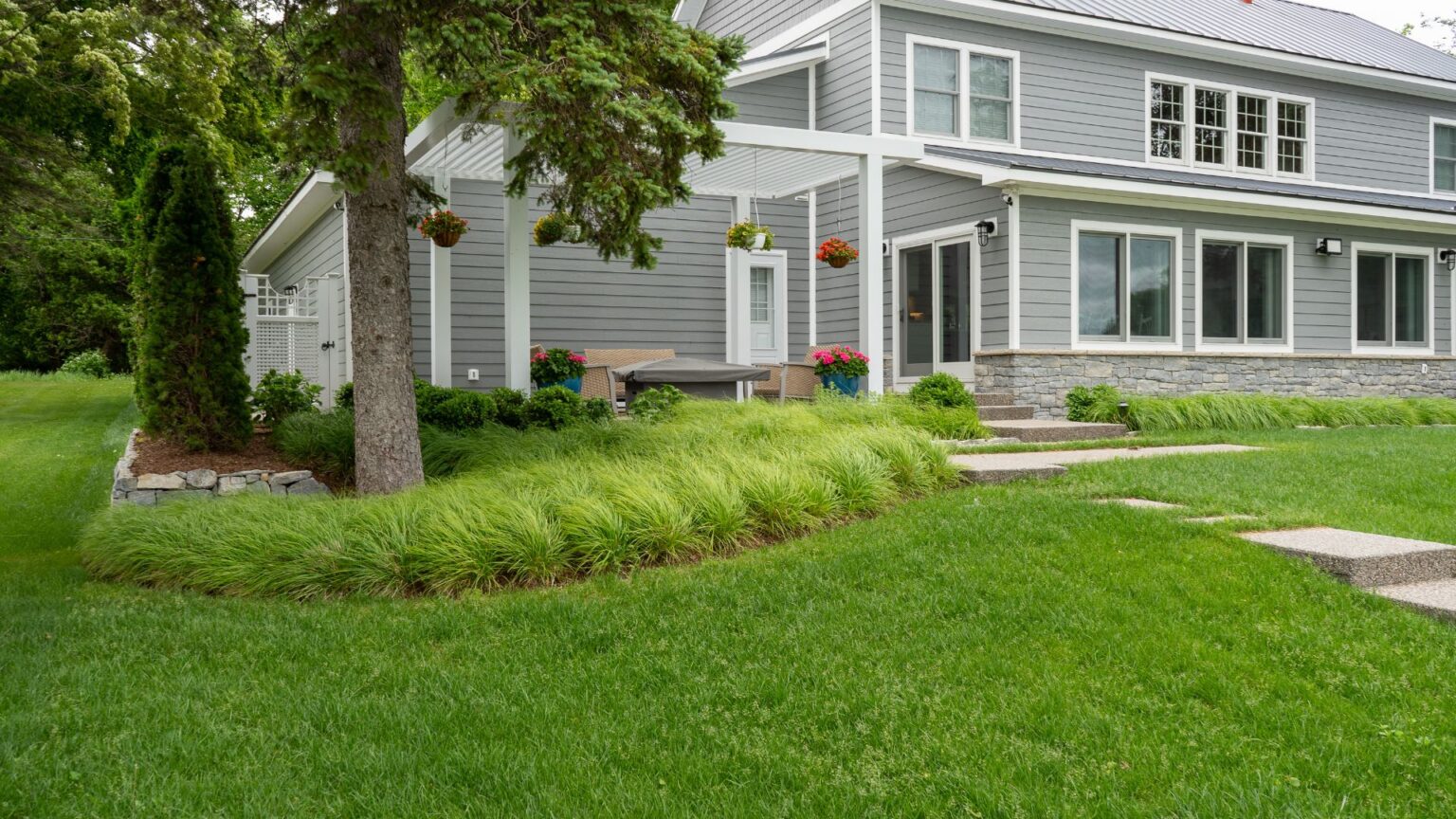
You don’t start lawn care in Northern Michigan when the snow melts. You start when the ground lets you.
That sounds like a small distinction, but it’s the reason some lawns green up evenly in May and others limp along until July. The homeowners who get the timing right aren’t watching the calendar. They’re watching their yard.
Here’s how to read the signals, what to do in what order, and how to handle spring start-up if you’re not up north full-time.
The True Start of Lawn Care Season
Around Cheboygan County and Emmet County, most lawns are ready somewhere between mid-April and early May. But that window shifts year to year, and it shifts within a single property depending on sun exposure, slope, and how close you are to a lake.
Your lawn is ready when:
- Frost is fully out of the ground
- Soil feels firm underfoot, not soft or spongy
- Grass is naturally starting to green up
- Snowmelt isn’t pooling in low spots
If you step onto the lawn and your boot leaves an imprint, it’s too early. Compacting saturated soil in April slows root growth for the rest of the season, and Northern Michigan’s growing season is already short enough that early mistakes tend to stick around.
Lakefront properties along Burt, Mullett, and Douglas Lake often thaw a week or two behind inland properties because the cold water moderates spring air temperatures. Wooded lots hold frost longer, too. The south-facing section of your yard may be ready to walk on while the shaded side is still saturated.
What Winter Leaves Behind
In spring, your lawn is recovering from five or six months under snow.
That means you’re dealing with matted grass, trapped moisture, possible snow mold, shifted soil from freeze-thaw cycles, and plow damage along driveways and road edges. Pink snow mold (the kind that leaves salmon-colored patches) is especially common in this part of the state after heavy snow years. It usually resolves on its own once air and sunlight reach the turf, but only if you clear the debris sitting on top of it.
That’s why the first few steps of spring matter more than anything you’ll do in June.
What Winter Leaves Behind
1. Do a Full Cleanup
Before anything else, clear out leaves, pine needles, fallen branches, and any dead plant material left over from fall. Properties with a lot of white pine or hemlock tend to accumulate a thick needle layer that blocks sunlight and airflow right when the grass is trying to wake up.
This is also the time to look at your beds and property edges, not just the lawn itself. A proper spring cleanup sets up everything that comes after it.
2. Inspect Before You Act
Walk the property slowly. Look for snow mold patches, bare or thinning areas, plow damage along the driveway and road apron, and drainage issues where snowmelt has pooled.
Most homeowners skip this step, and it’s where the biggest long-term problems start. A bare patch you notice in April is easy to address. The same patch in July, after weeds have moved in, is a much bigger project.
3. Wait to Mow
It’s tempting to mow the first warm week in April. Hold off.
Wait until the grass reaches three to four inches, the soil is dry enough that your mower won’t leave tracks, and you’ve done your cleanup pass. The first mow should help the lawn, not stress it.
When you do mow, keep the blade high. Cutting too short in the first pass removes the leaf tissue the grass needs to recover.
4. Be Intentional with Fertilizer
Early feeding can help, but only if the lawn is ready. Applying fertilizer before the soil warms wastes product, pushes weak top growth at the expense of roots, and can burn turf that’s still stressed from winter.
Soil conditions vary a lot across Northern Michigan. Sandy soils near the lakes drain fast and warm up earlier. Heavier clay soils further inland hold water longer and need more time. A fertilizer schedule that works for a property in Indian River won’t necessarily work for one in Harbor Springs.
5. Get Irrigation Ready Early
By the time your lawn looks dry, it already is. Spring is the time to turn your system back on, check for leaks or broken heads (plow damage often hits sprinkler heads near driveways), and adjust coverage before you need it.
A well-functioning system keeps your lawn consistent once temperatures climb in June. Waiting until things are already brown is waiting too long.
If You’re Not Here Until Memorial Day
A lot of Northern Michigan homeowners aren’t here for the start of the season. If you don’t arrive until May or June, spring cleanup isn’t something you can time by watching your yard.
A few things to think about:
Someone needs to handle the first cleanup pass before the grass gets long enough that it smothers itself. If nothing happens on your property until you pull into the driveway on Memorial Day weekend, you’re usually looking at a rough first mow, uneven green-up, and bare spots that never fully recover.
The window for early-season work (cleanup, inspection, irrigation startup, any overseeding of damaged areas) runs roughly from mid-April through early May. Booking a local crew to handle that window ahead of your arrival means you show up to a yard that’s already on track, not one you’re spending the first weekend fixing.
If you’re a seasonal owner who hasn’t set this up before, it’s worth calling in March or early April. Good crews book up fast once the ground thaws.
Month-by-Month Timeline
Late March through early April: Snow is melting, ground is still frozen or saturated. Do nothing yet. This is the waiting phase, and it’s the most common time homeowners do damage by getting started too soon.
Mid-April: Start light cleanup in areas that are dry. Remove branches and heavy debris. Stay off wet turf.
Late April through early May: Full cleanup. Light raking. First inspection for snow mold, plow damage, and drainage issues. First mow if conditions are right.
Mid-May: Fertilization if the lawn is actively growing. Overseeding bare patches. Irrigation startup.
Late May through early June: Regular mowing schedule. Monitor growth. Spot-treat problem areas before they spread.
The Mistake That Costs You All Summer
A homeowner who rakes aggressively in early April, mows the first 65-degree weekend, and throws down fertilizer before the soil warms can easily spend $300 to $400 on products and labor that actively set the lawn back. The damage doesn’t show up right away. It shows up in June, when the grass that should be thickening is instead patchy and stressed.
The lawns that look best in August almost always belong to homeowners who waited, focused on cleanup first, and let the season come to them.
What a Strong Start Looks Like
By early summer, a properly timed lawn will green up evenly, fill in thicker rather than patchier, handle heat stress better, and need fewer corrections through the rest of the season. That’s the goal: a yard that holds up through July and August without a rescue effort in the middle of it.
Get on the Schedule Early
Spring fills up fast in Northern Michigan. The cleanup window is narrow, and the crews who do this work well are usually booked through April by the time most people start thinking about it.
If you’d rather hand off the timing and the first few weeks of work, request a free estimate and get on the schedule before the ground thaws. A good start in April is what a good-looking lawn in August is built on.